

Does Deeper Microneedling Work Better?

SKIN REJUVENATION
Microneedling is often discussed as though deeper treatment automatically means better results. In reality, the most useful depth is the one that matches the skin, area and concern being treated.
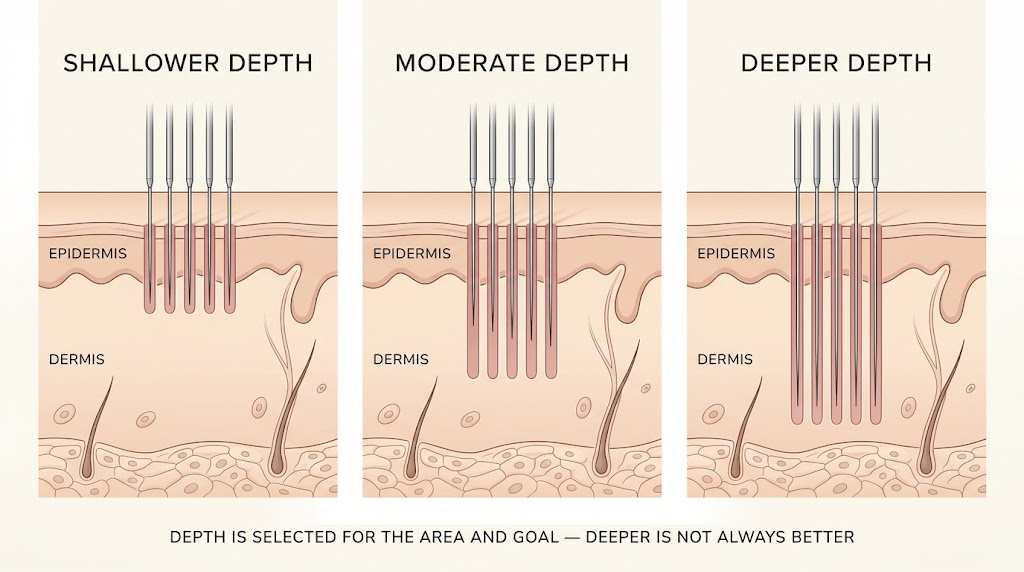
Different areas need different settings
The forehead, cheeks and other facial areas do not have the same skin thickness. A depth that makes sense in one area may be unnecessarily aggressive in another.
The goal matters more than the number
Treatment for mild texture or enlarged-looking pores may not need the same settings as treatment for deeper acne-scar concerns. More depth can also mean more redness, swelling and recovery.
Controlled treatment is the point
Microneedling works by creating a controlled healing response. The objective is enough stimulation to support collagen remodeling without adding avoidable injury.
MajorGlow individualizes depth
At MajorGlow, SkinPen® settings are selected by anatomy, treatment area and skin goals. The best result comes from precision, not from chasing the deepest possible setting.
Results build between appointments
Visible redness can fade long before deeper remodeling is finished, so judging a deeper microneedling session too early can make the result seem smaller than it ultimately is.
Choose intensity by the goal
Going deeper only makes sense when the target requires it and the tissue can tolerate it. More depth can add recovery and risk without adding useful benefit if the concern is more superficial.
How to judge progress
Texture improvement is gradual, so consistent photos are more useful than day-to-day mirror checks. We look for changes in smoothness, pore visibility and overall skin quality across several weeks, then decide whether another session would add meaningful benefit.
Depth is not a quality score
A deeper setting is not automatically a better treatment. Thin areas, shallow scars, and sensitive skin may need a more conservative approach than thicker tissue or deeper scar patterns. Needle depth is one variable among many, including passes, density, device technique, recovery history, and treatment interval. Precision matters more than reaching the largest number on the device.


