

Chemical Peel vs Microneedling: Surface Renewal vs Remodeling
SKIN REJUVENATION
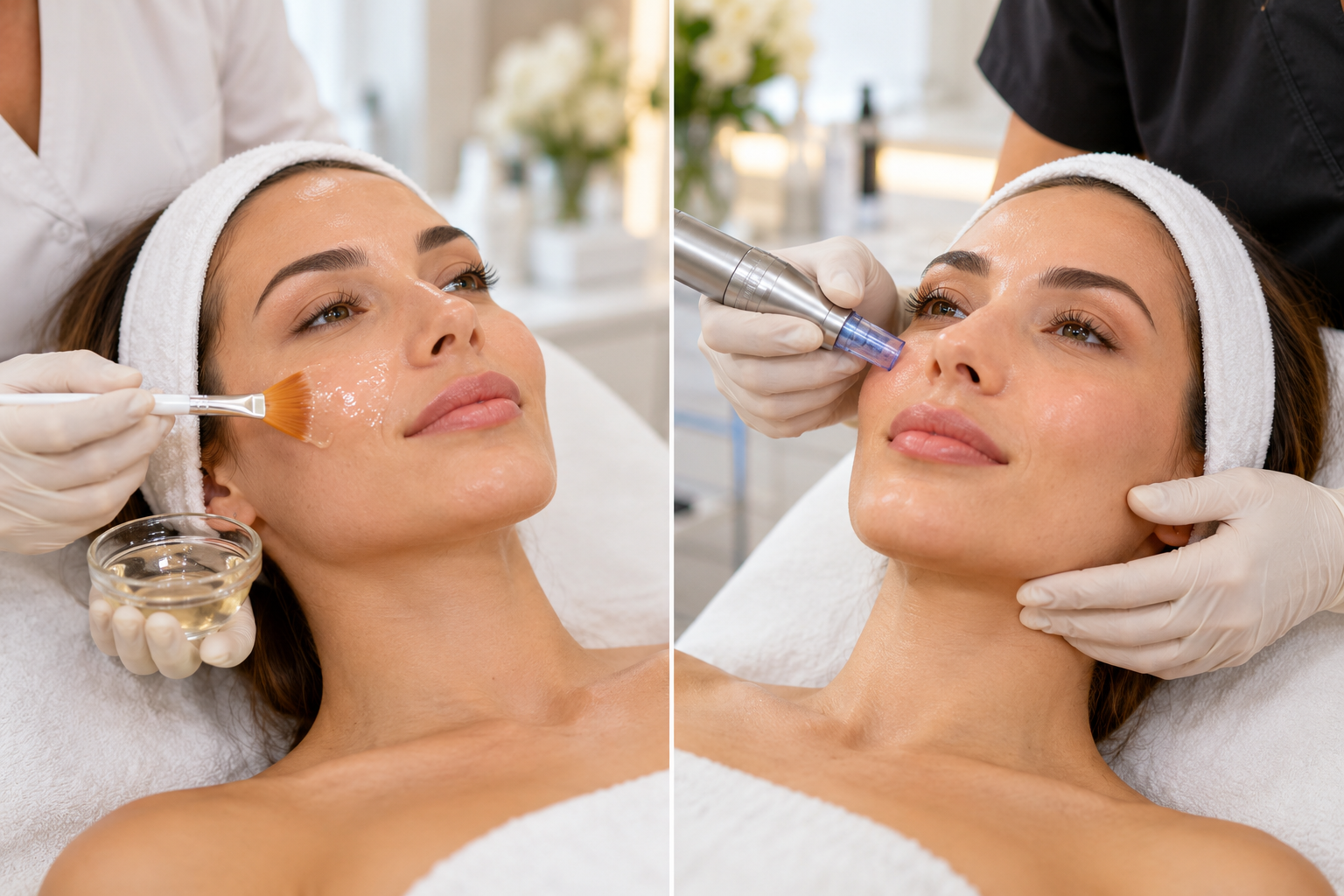
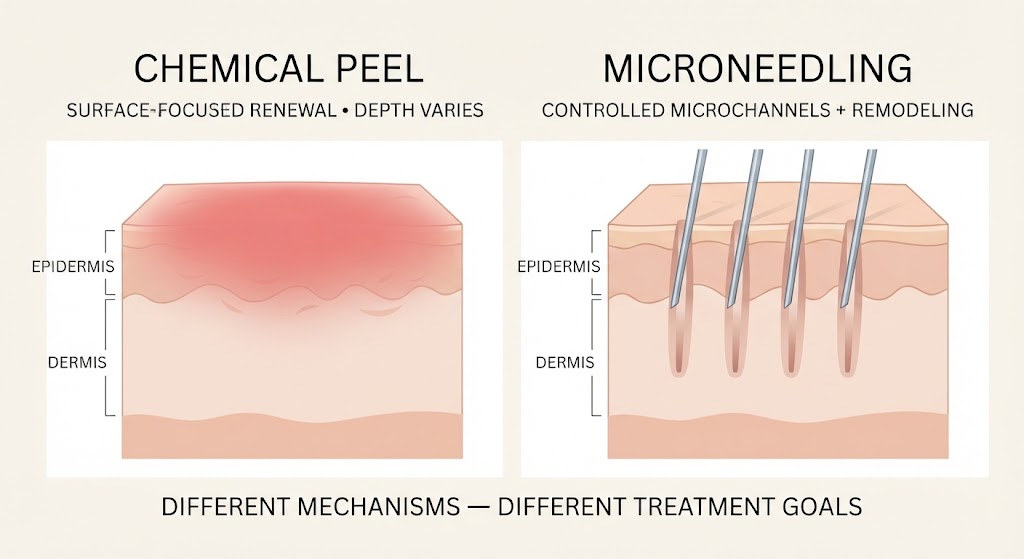
Chemical peels and microneedling are both used for skin rejuvenation, but they work through different biological pathways. Peels change how surface and superficial skin layers shed, while microneedling creates controlled channels that trigger a repair response and collagen remodeling.
When a peel may make sense
A peel may be considered for dullness, selected pigment concerns, superficial texture, acne-related congestion, or general surface renewal. The depth of treatment can range widely.
The solution and strength should be selected based on skin type, concern, and tolerance.
When microneedling may make sense
Microneedling may be useful when the goal involves texture, selected acne scars, fine lines, or gradual collagen remodeling. It does not rely on chemical exfoliation in the same way a peel does.
Needle depth can be adjusted across different areas of the face.
Pigment and scars are different targets
A dark acne mark and a depressed acne scar may occur in the same area but represent different problems. Pigment-focused treatment and collagen remodeling may therefore need to be planned separately.
Trying to solve both with the same aggressive procedure can increase irritation.
Downtime looks different
Peels may cause dryness, flaking, peeling, or sensitivity. Microneedling more often causes redness, swelling, and temporary roughness or pinpoint marks.
Recovery depends on treatment intensity rather than the name of the procedure alone.
They can be complementary
Some long-term plans use different modalities at different times to address both surface and deeper texture concerns. That does not mean they should be stacked aggressively in the same session.
Spacing and sequence should protect the skin barrier and allow recovery.
Why acne scars often need combination thinking
An acne scar can include surface discoloration, uneven texture, tethering, and true tissue loss at the same time. A peel may improve superficial pigment or texture while microneedling targets remodeling, but neither automatically addresses every structural component.
The treatment plan should identify which part of the scar is most visible before choosing a procedure.
Spacing protects the barrier
Alternating procedures can be useful, but stacking aggressive treatments without adequate recovery increases irritation and the risk of PIH. The skin barrier should be clinically recovered before the next major stimulus.
More procedures in a shorter period do not necessarily produce faster remodeling.
How skin condition changes the choice
For a peel versus microneedling decision, barrier health, active acne, recent sun exposure, pigment sensitivity, and the depth of the concern all influence how much exfoliation or controlled injury is appropriate.
A peel primarily changes the surface and pigment environment, while microneedling relies on controlled injury and remodeling. The better option depends on which mechanism matches the problem.
How to judge whether the plan is working
Peel results should be judged after flaking and redness resolve, while microneedling needs more time for remodeling. Consistent photos help compare changes in tone versus texture.
If improvement plateaus, using a stronger peel or deeper needles is not automatically better. A different mechanism or more recovery time may be more appropriate.
Choosing between chemical peels and microneedling
Chemical peels are primarily surface-renewal tools, while microneedling focuses more on controlled repair and remodeling. Choosing between them starts with identifying whether the concern is pigment, surface texture, scar structure, or a combination.


