

Chemical Peels: Which Strength Is Right for Your Skin?

SKIN REJUVENATION
Chemical peels use selected acids to create controlled exfoliation. The right peel is not simply the strongest one available. It should match the concern, skin type and amount of downtime you can comfortably plan for.
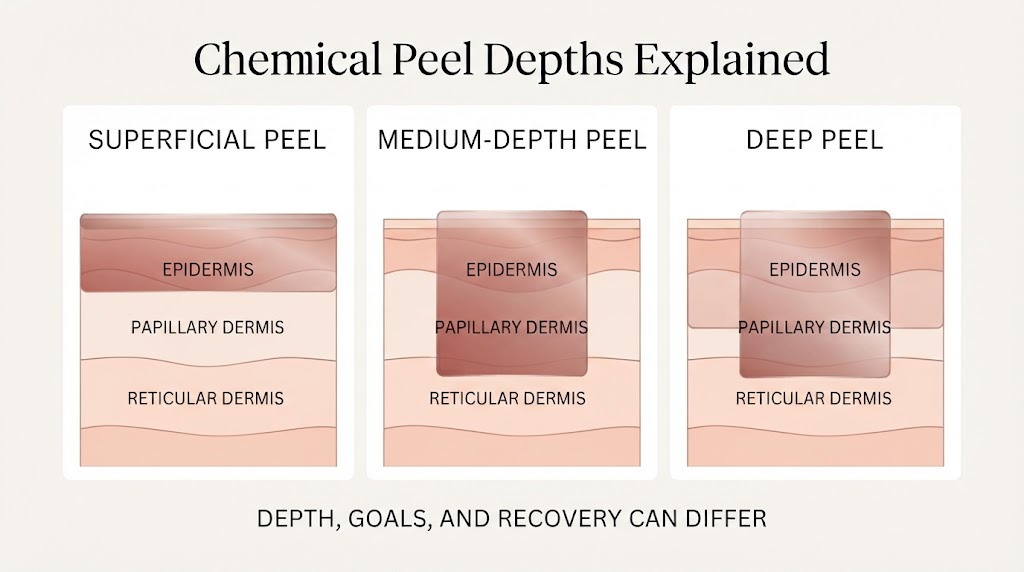
Lighter peels focus on the surface
Superficial peels can be useful for dullness, mild uneven tone and surface texture. They usually involve less recovery and can fit into a maintenance plan more easily.
Stronger peels need more planning
Deeper resurfacing can create more visible peeling and recovery. The potential benefit has to be weighed against irritation, pigment risk and how much downtime is acceptable.
Pigment history matters
Patients who develop post-inflammatory dark marks or have melasma may need a more cautious approach. Aggressive exfoliation can create inflammation that worsens pigment in susceptible skin.
Peels are one tool among several
HydraFacial may be better for hydration and low-downtime polish, while microneedling or laser may be more appropriate for deeper texture or selected pigment concerns. At MajorGlow, we choose peel strength only when a peel is the right treatment for the goal.
How to prepare for a peel
Your provider may recommend pausing selected active products before treatment and avoiding unnecessary sun exposure. Preparation depends on peel strength and skin type, so following the specific plan matters more than using a generic pre-peel routine.
What recovery can look like
A lighter peel may cause little visible shedding, while a stronger peel can involve dryness, flaking or more obvious peeling. The expected recovery window should be discussed before treatment, especially if you have travel or an event coming up.
How to know whether to repeat it
A peel should be repeated because the skin still has a clear goal, not because a routine says it is due. We look at tone, texture, sensitivity and how well the skin recovered before recommending another treatment.


