

Post-Inflammatory Hyperpigmentation Explained: Why Marks Linger After Inflammation
Updated: Sep 30

LASER + ENERGY
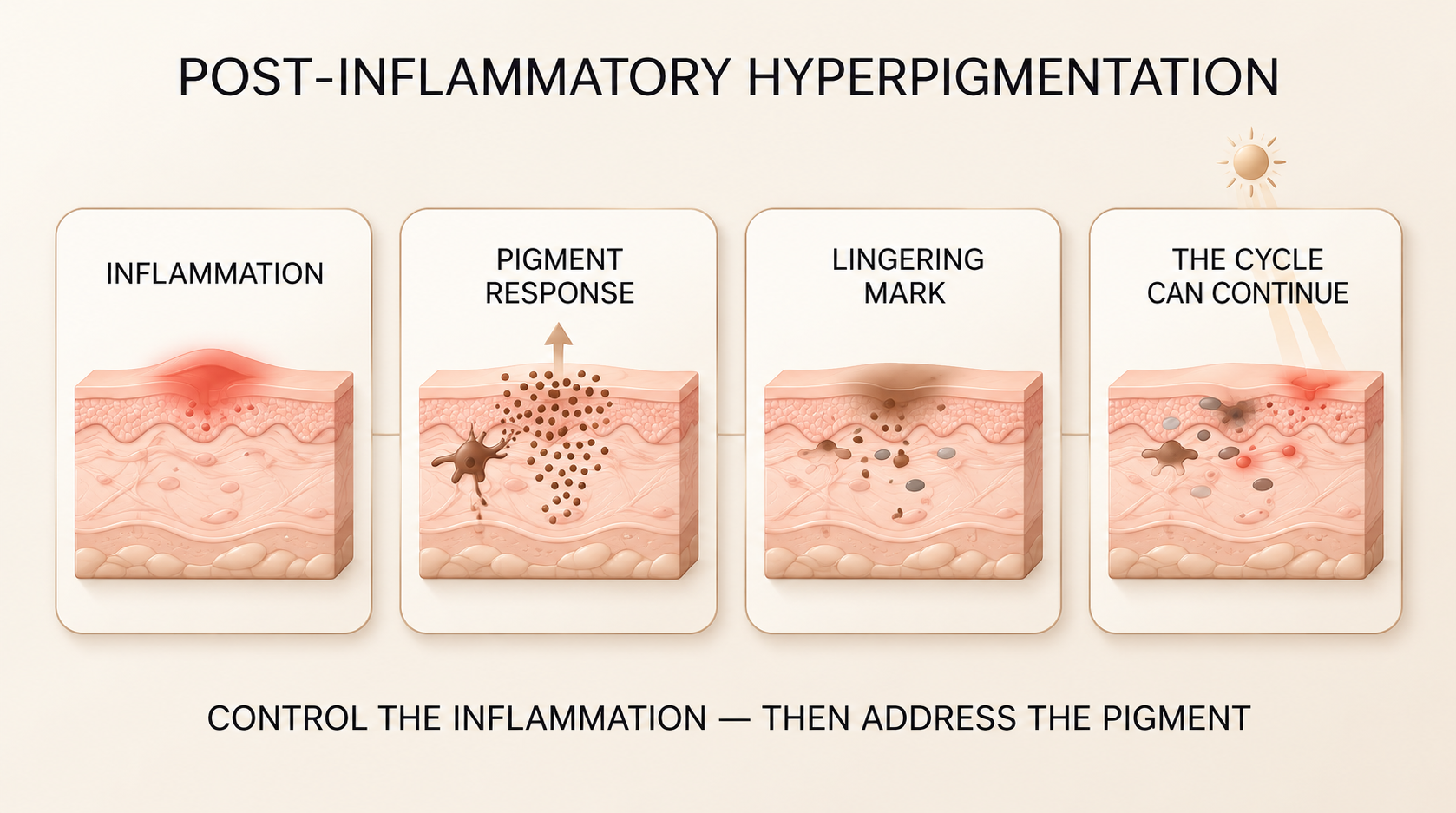
Post-inflammatory hyperpigmentation, or PIH, is discoloration that appears after the skin has been inflamed or injured. It can follow acne, eczema, burns, picking, aggressive exfoliation, or aesthetic procedures. The original problem may be gone while the pigment remains for weeks or months.
Why inflammation creates pigment
Inflammatory signals can stimulate melanocytes to produce and distribute more pigment. If pigment drops deeper into the skin, the color may appear gray-brown and can take longer to fade.
The tendency is more noticeable in some skin tones and in people with a strong history of pigment after irritation.
Why stopping new inflammation comes first
Treating old marks while acne, dermatitis, or repeated picking continues creates a cycle of new pigment. Controlling the underlying inflammation reduces the number of new marks that are being added.
Barrier support can also help the skin tolerate pigment-focused treatment more consistently.
Why aggressive treatment can backfire
Strong peels, high-energy devices, or irritating skin care can create additional inflammation and darken PIH in susceptible patients. Faster is not always better.
A gradual plan may produce more reliable improvement than repeatedly provoking the skin.
Sun exposure can prolong discoloration
Ultraviolet and visible light can deepen existing pigment and make contrast more noticeable. Daily protection supports fading and reduces additional stimulation.
This is relevant even when the original trigger was acne rather than the sun.
Treatment depends on depth and cause
Topical ingredients, superficial peels, and selected devices may be used depending on pigment depth, skin tone, and tolerance. The plan should be adjusted if irritation develops.
PIH can improve, but the timeline varies and complete clearance cannot be guaranteed.
What a treatment plan should prioritize
PIH care should prioritize stopping the inflammation that keeps creating new pigment, protecting the skin from light, and choosing treatments that do not add unnecessary irritation.
What to remember about post-inflammatory hyperpigmentation
PIH is a pigment response to inflammation. The most effective strategy usually combines control of the original trigger, sun protection, and gradual pigment treatment that does not keep re-injuring the skin.


