

What Can PRP Do for Skin Rejuvenation?

SKIN REJUVENATION
Platelet-rich plasma, or PRP, is prepared from a small sample of your own blood and used in aesthetic treatment because platelets contain signaling proteins involved in normal healing.
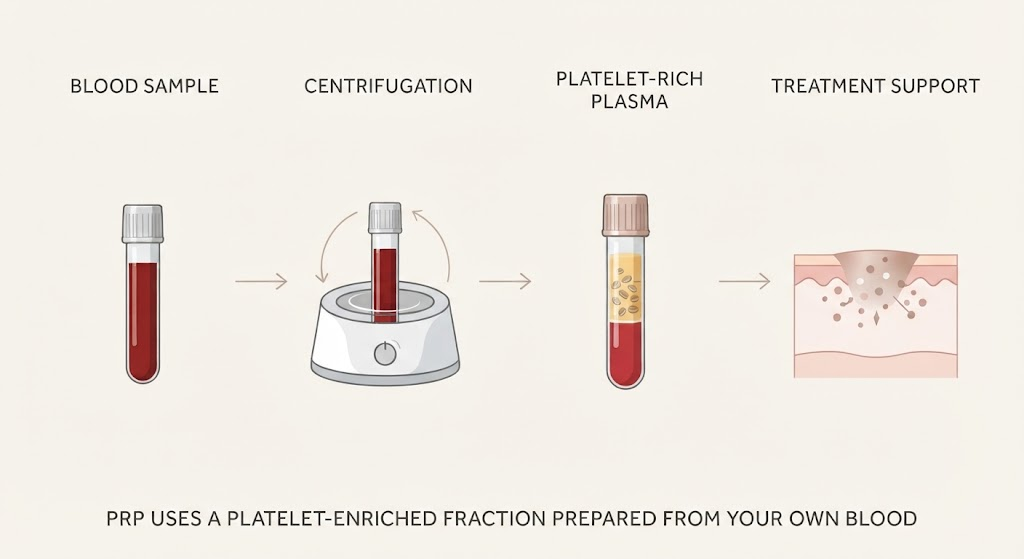
PRP is often paired with microneedling
Microneedling creates controlled micro-channels in the skin. PRP may be added as part of the treatment plan to support the healing environment and skin-rejuvenation process.
The goal is skin quality, not facial volume
PRP is not a structural filler. It is generally discussed in relation to texture, skin quality and regenerative treatment strategies rather than contouring the cheeks, lips or jawline.
Results develop gradually
Like other collagen-focused treatments, PRP is not designed to create an instant dramatic change. Improvement is usually evaluated over time and may be part of a treatment series.
MajorGlow uses it selectively
At MajorGlow, PRP is considered when it meaningfully supports the treatment goal. We match it to the skin concern rather than adding it automatically to every procedure.
What a consultation should clarify
A PRP consultation should clarify what you want to improve, whether PRP is being used alone or with microneedling, and whether the expected benefit justifies the added blood draw, cost, and recovery.
Keep the plan proportional
PRP does not need to be added to every collagen-focused treatment. Starting with the core procedure and reassessing the skin response can make it clearer whether PRP would add meaningful value.
Who may consider PRP
PRP may appeal to patients who prefer an autologous treatment and are already considering microneedling or another collagen-focused procedure. Whether it adds value depends on the skin goal, treatment plan and expectations rather than on the idea that regenerative treatments are automatically better.
What PRP cannot replace
PRP does not create structural projection like filler, remove pigment, or substitute for surgery when significant laxity is present. It is better viewed as an adjunct for selected skin-quality or healing goals. That distinction helps keep expectations realistic and prevents a biologic treatment from being asked to solve a problem that comes from a different tissue layer.


