

RF Microneedling Explained: How Controlled Energy Supports Skin Remodeling

LASER + ENERGY
Microneedling and Radiofrequency Work Together
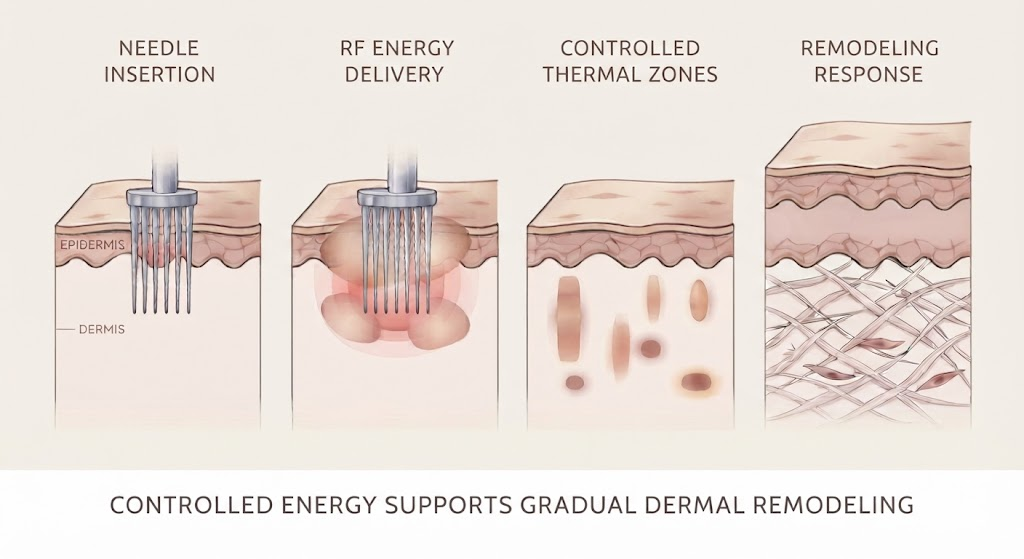
Traditional microneedling creates controlled microchannels that trigger a wound-healing response. Radiofrequency microneedling adds a second component by delivering RF energy through the needles into targeted depths of the skin.
This creates small zones of controlled thermal injury within the dermis while limiting unnecessary injury to surrounding tissue. The treatment is designed to stimulate remodeling rather than remove the surface of the skin.
What the Radiofrequency Energy Does
Radiofrequency energy generates heat in the tissue around the needle tips. This controlled thermal effect initiates a repair response that can support collagen remodeling and elastin production over time.
Recent systematic reviews of radiofrequency microneedling describe improvements in concerns such as skin texture, laxity, photoaging, and some types of acne scarring, although treatment protocols and study designs vary.
Why Needle Depth Matters
The face does not have the same tissue thickness everywhere. Appropriate depth and energy settings depend on the treatment area, the device being used, the patient's skin, and the clinical goal.
This is one reason radiofrequency microneedling is not simply a one-setting treatment. Careful parameter selection is part of using the technology safely and effectively.
What Changes First
Immediately after treatment, temporary redness, swelling, warmth, tenderness, pinpoint bleeding, or dryness can occur. These early changes are part of the short-term inflammatory and healing response rather than the final result. The FDA has also reported serious complications with certain RF microneedling uses, including burns, scarring, fat loss, disfigurement, and nerve damage, so treatment should be performed by an appropriately trained licensed provider using a properly selected device and settings.
Collagen remodeling is gradual. Visible improvement develops over weeks to months as the tissue continues to repair and reorganize.
What RF Microneedling May Address
Uneven texture
Mild to moderate skin laxity
Fine lines and signs of photoaging
Certain acne scars
How RF microneedling settings are personalized
RF microneedling settings should reflect skin thickness, scar or laxity pattern, pigment sensitivity, treatment area, and prior response. Depth and energy are adjusted together rather than pushed to a maximum simply because a device allows it.


