

Why Pigmentation Can Return After Treatment
Updated: Sep 30

LASER + ENERGY
Pigment treatment is often discussed as if a dark spot can simply be erased. In reality, many forms of discoloration reflect an ongoing tendency in the skin. Sun exposure, hormones, inflammation, heat, and genetics can continue to stimulate pigment even after a successful treatment session.
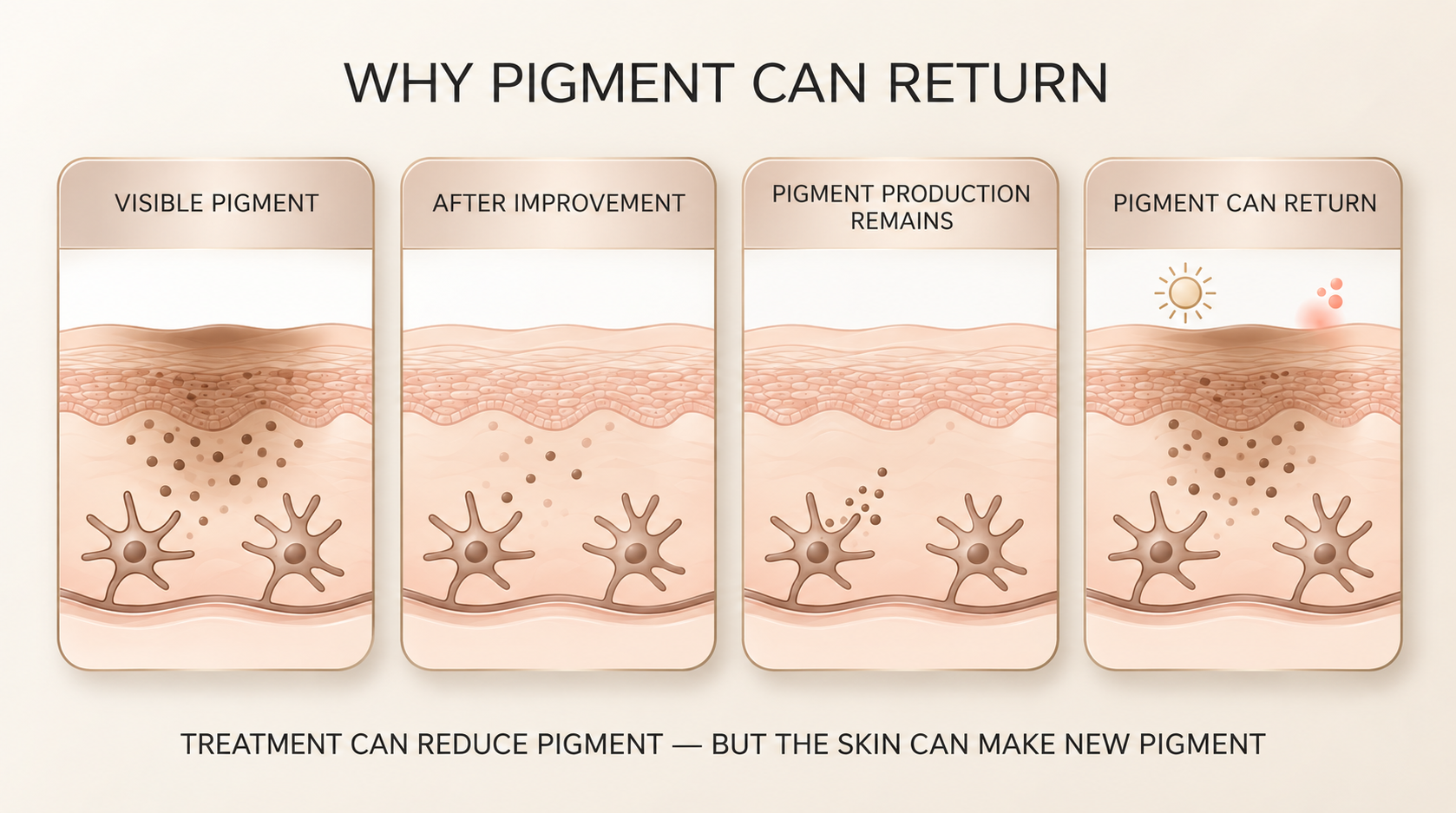
Visible pigment is only part of the process
A laser, peel, or topical product may reduce existing pigment, but melanocytes remain capable of making new pigment. If the trigger continues, discoloration can return or new spots can appear nearby.
This is why treatment and prevention have to occur together.
Sun exposure is a major reason for recurrence
Ultraviolet exposure stimulates pigment production and contributes to freckles, lentigines, melasma, and worsening of PIH. Even short repeated exposures can add up over time.
Daily protection helps preserve treatment gains rather than serving only as a pre-treatment precaution.
Hormonal and inflammatory triggers can persist
Melasma may respond to treatment and then recur when hormonal or environmental triggers remain. Acne and irritation can create new PIH even while older marks are fading.
Maintenance therefore depends on the type of pigment, not just on how much improvement was achieved initially.
Overtreatment can create new pigment
Repeatedly using aggressive settings or irritating products can cause inflammation that stimulates additional discoloration. This is especially important in patients who already have a history of PIH.
More treatment is not automatically more progress.
A maintenance plan should be individualized
Some patients need ongoing topical care, periodic procedures, seasonal adjustments, or stricter sun protection. Others may need less intervention once the main trigger is controlled.
The plan should reflect the diagnosis and the skin's response rather than a fixed schedule.
Why seasonal changes can affect recurrence
Pigment often behaves differently across the year because ultraviolet exposure, outdoor activity, heat, and skin-care routines change with the seasons. A maintenance plan that works in winter may need to be adjusted during brighter or hotter months.
This does not mean treatment has stopped working. It means the balance between pigment stimulation and pigment control has changed.
Why maintenance should not mean constant procedures
Maintenance can include sunscreen, topical care, trigger avoidance, and periodic reassessment. It does not necessarily require frequent lasers or peels.
Repeated procedures should be used when there is a clear target and adequate recovery, not simply because time has passed since the previous treatment.
Why control of triggers matters after treatment
Even when visible discoloration fades, pigment-producing cells remain capable of responding to new triggers. The exact triggers depend on whether the pattern is sun damage, PIH, melasma, or another pigment condition.
That is why prevention after treatment should match the diagnosis: photoprotection, trigger control, and a maintenance routine may be as important as the procedure itself.
How to recognize when the strategy needs to change
When pigment repeatedly rebounds, stronger treatment can sometimes create more inflammation and more discoloration. Reassessment is more useful than automatically increasing energy or peel strength.
A successful long-term plan may mean longer stable periods, fewer new spots, and easier-to-control recurrence rather than permanent elimination of pigment activity.
Why pigment maintenance matters
Pigment can return because treatment changes what is visible without removing every biological trigger. Long-term control depends on understanding the pigment pattern and protecting the skin from the factors that keep stimulating it.


