

Skin Barrier Explained: Why Healthy Skin Starts at the Surface

SKIN REJUVENATION
Healthy Skin Is More Than What You See
When skin feels dry, tight, irritated, or unusually reactive, the problem is not always a lack of moisturizer. Often, the skin barrier itself is struggling to do its job.
The skin barrier is the outermost protective layer of the epidermis. It helps keep water inside the skin while limiting the entry of irritants, allergens, and environmental stressors.
When that barrier is functioning well, skin tends to feel smoother, more comfortable, and better able to tolerate everyday skincare. When it is disrupted, several concerns can appear at once.
What Is the Skin Barrier?
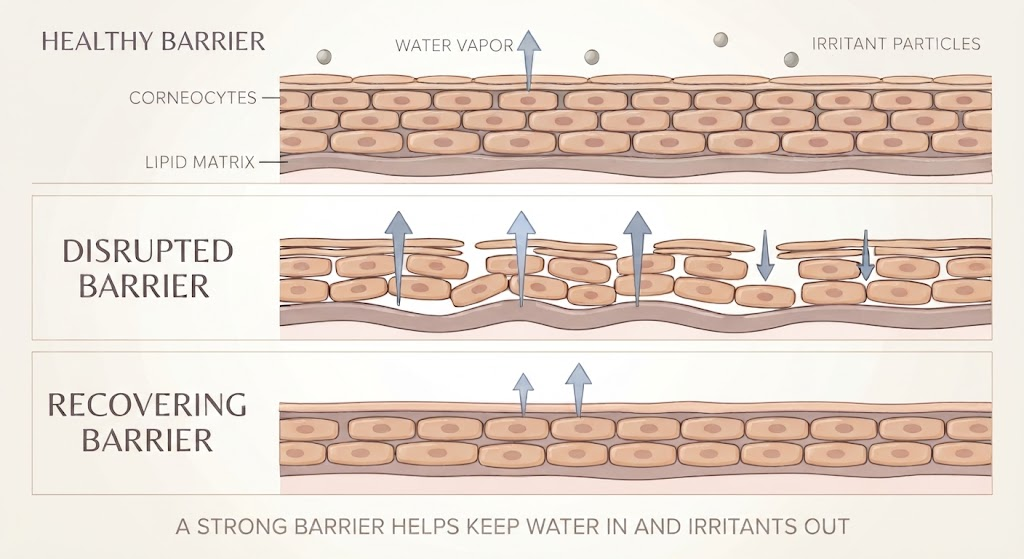
The skin barrier is primarily located in the stratum corneum, the outermost part of the epidermis. It is often described using a brick-and-mortar model.
The "bricks" are corneocytes, flattened skin cells that form the physical structure. The "mortar" is made of lipids, including ceramides, cholesterol, and fatty acids, that help seal the spaces between those cells.
Together, this structure creates a flexible protective layer that reduces unnecessary water loss while helping shield the skin from the outside environment.
What Happens When the Barrier Is Disrupted?
A compromised barrier becomes less effective at controlling the movement of water and outside substances. Transepidermal water loss can increase, allowing moisture to escape more easily from the surface.
At the same time, substances that would normally remain outside the skin may penetrate more easily. That combination can make the skin feel dry and sensitive at the same time.
Common signs may include:
Tightness or persistent dryness
Flaking or rough texture
Stinging when skincare is applied
Redness or increased reactivity
A dull or dehydrated appearance
What Can Weaken the Skin Barrier?
Barrier disruption usually develops from a combination of factors rather than one single product or event.
Over-exfoliating with acids, scrubs, or retinoids
Harsh cleansers or frequent washing
Low humidity, cold weather, and indoor heating
Unprotected sun exposure
Using too many active ingredients at once
Certain skin conditions that naturally affect barrier function
The goal is not to avoid active skincare completely. It is to use it in a way the skin can tolerate and recover from.
Barrier Repair Is About Reducing Stress
When skin becomes reactive, adding more products is rarely the first answer. A simpler routine often gives the barrier time to recover.
A barrier-supportive routine typically focuses on gentle cleansing, adequate moisturization, daily sun protection, and temporarily reducing irritating actives when necessary.
Ingredients such as ceramides, humectants, and emollients can help support hydration and reinforce the skin's surface environment, but the overall routine matters just as much as any single ingredient.
Why the skin barrier changes treatment planning
The skin barrier may be microscopic, but its effects are visible every day. It influences hydration, sensitivity, texture, comfort, and how well the skin responds to both products and treatments.
Supporting the barrier is not a trend or a temporary reset. It is one of the foundations of long-term skin health.


