

What to Expect After Laser Tattoo Removal: Healing, Fading, and Session Spacing
LASER + ENERGY
Tattoo removal is a gradual process. The laser interaction happens during the appointment, but visible fading can continue afterward as the skin recovers and the body processes fragmented pigment. The amount and pace of fading vary from person to person and from tattoo to tattoo.
What you may notice right after treatment
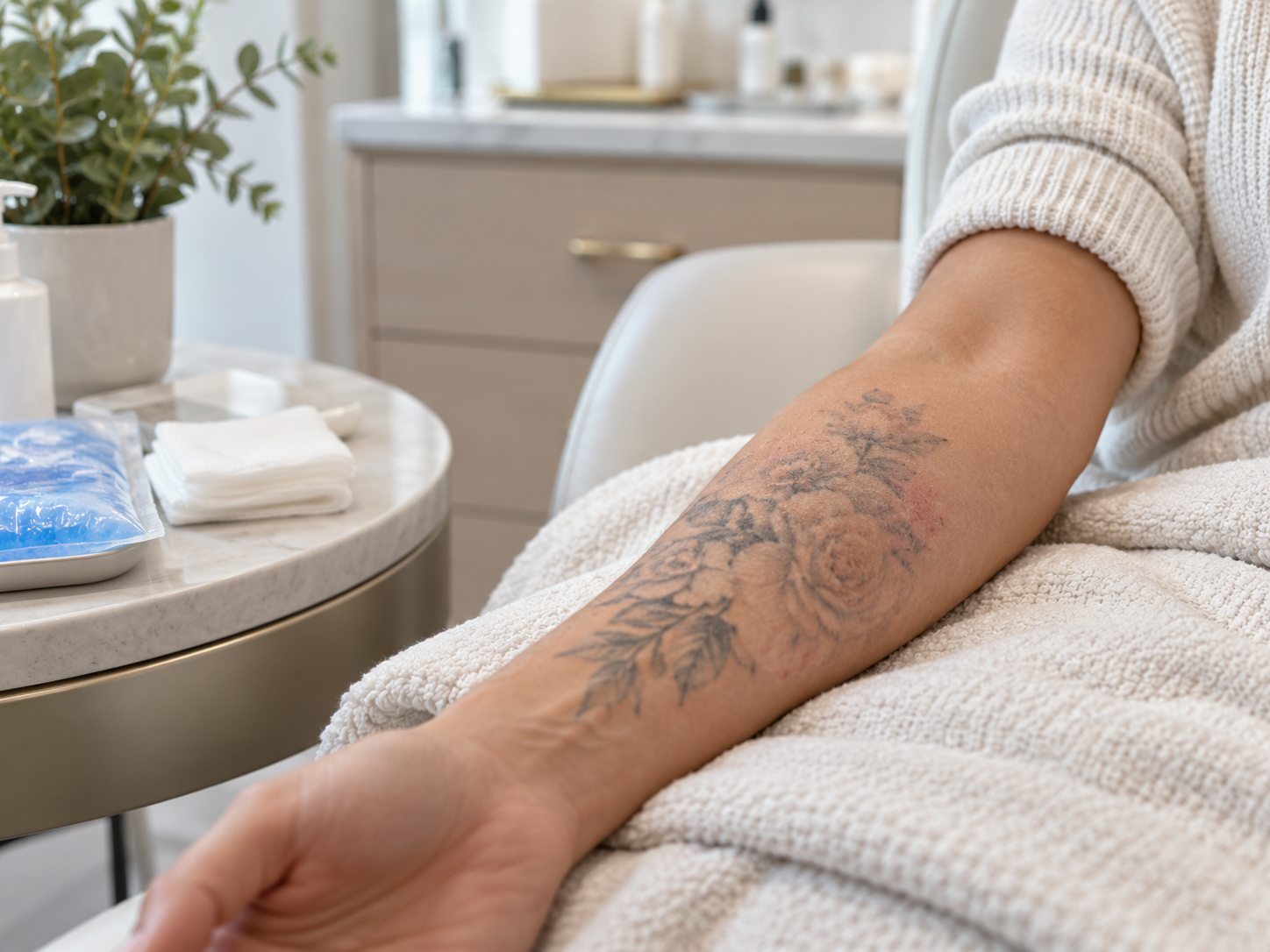
Some tattoos show temporary whitening or “frosting” immediately after treatment. Redness, swelling, warmth, and tenderness can also occur. Depending on the tattoo, settings, and individual skin response, blistering, pinpoint bleeding, or crusting may develop during the early healing period.
Do not pick, scratch, or deliberately open blisters or crusts. Follow the aftercare instructions provided for your specific treatment. Because aftercare can vary by the treated area and skin response, products and dressings should be used only as directed by the treating clinician.
Fading can continue after the surface looks healed
Once the surface looks normal again, pigment clearance may still be occurring below the surface. The laser has disrupted some ink particles, but the body needs time to process them. A tattoo may continue to change between appointments, and the degree of fading after any single session cannot be guaranteed.
Why sessions are spaced apart
More frequent treatment is not automatically better. The skin needs time to recover, and pigment clearance continues between sessions. The appropriate interval should be individualized based on healing, tattoo characteristics, skin type, the device used, and the clinician’s treatment plan.
Protecting the area between sessions
Sun and tanning exposure can increase the risk of unwanted pigment changes because melanin also absorbs laser energy. Protect the treated area from unnecessary sun exposure and follow the recommended sun-protection plan once the skin has healed.
When to contact a medical professional
Contact the treating medical professional if pain, redness, swelling, drainage, blistering, or other symptoms are severe, spreading, worsening, or not improving as expected. Fever, signs of infection, or a significant unexpected reaction should be medically assessed rather than managed from general online advice.
Laser tattoo removal can also cause prolonged lightening or darkening of the skin, textural change, scarring, incomplete clearance, or unexpected pigment change. These possibilities should be discussed before treatment.
Educational note: This article provides general information and is not medical advice. Candidacy, device and wavelength selection, treatment settings, expected response, risks, session timing, and aftercare should be determined after an appropriate clinical assessment. Results vary, and complete tattoo removal cannot be guaranteed.


