

PRP Hair Restoration Explained: How Platelet-Rich Plasma Is Used for Hair Thinning
WELLNESS + RESTORATION
Hair thinning has many possible causes, so treatment should begin with understanding what type of hair loss is present. Platelet-rich plasma, or PRP, is one option that has been studied most often for androgenetic alopecia, commonly called pattern hair loss.
How PRP is prepared
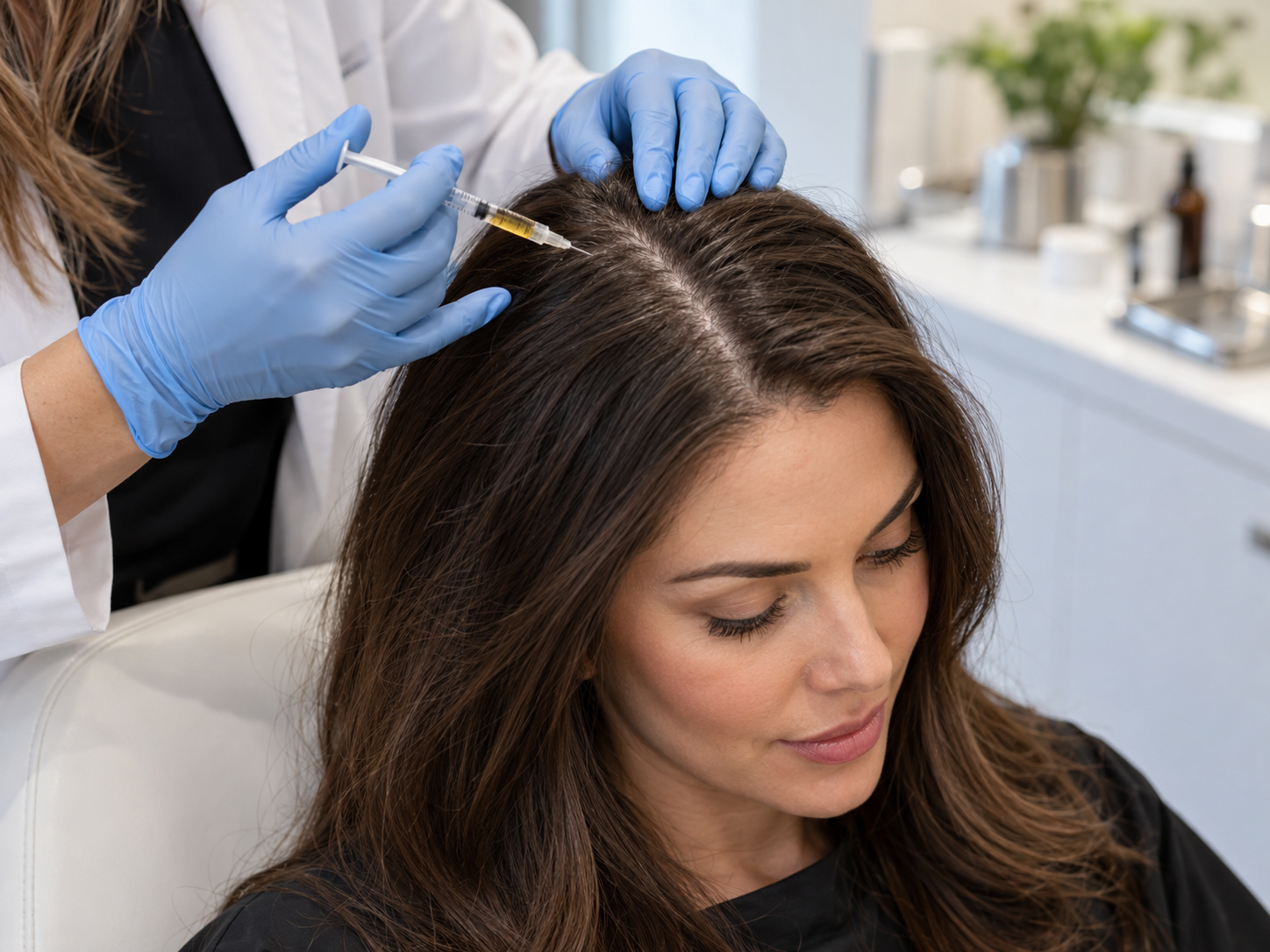
A small amount of blood is collected and processed in a centrifuge to separate a platelet-rich portion of plasma. That preparation is then injected into selected areas of the scalp. Because the material comes from the patient's own blood, PRP is considered an autologous treatment.
What the research suggests
Clinical studies and meta-analyses suggest that PRP may increase hair density in some people with androgenetic alopecia. At the same time, study methods vary considerably and the certainty of evidence is not high. PRP is not FDA approved specifically as a treatment for androgenetic alopecia. Some PRP preparation devices have FDA clearances for particular uses, but that does not equal FDA approval of PRP for hair loss.
Why diagnosis matters first
Pattern hair loss, thyroid disease, iron deficiency, autoimmune conditions, medication effects, hormonal changes, and scarring disorders can all present differently. PRP cannot correct every cause of shedding or thinning, so evaluation matters before committing to a treatment series.
A gradual treatment strategy
Hair growth cycles are slow. When PRP is used, treatment is generally approached as a series rather than a one-time event, and progress is assessed over months rather than days. A clinician may also discuss established medical treatments depending on the diagnosis.
What a PRP hair treatment involves
A small blood sample is collected and processed to isolate a platelet-rich portion. The preparation is then placed into selected areas of the scalp using a series of injections. Temporary tenderness, pinpoint bleeding, swelling, or scalp sensitivity can occur after treatment.
When PRP is used, it is commonly approached as a series rather than a one-time procedure, with maintenance considered according to response and the underlying diagnosis. It may also be used alongside other evidence-based hair-loss treatments when medically appropriate. PRP does not create new follicles, and not every person with thinning hair is expected to respond.

