

Laser Toning Explained: What Low-Fluence Pigment Treatment Can and Cannot Do
Updated: Sep 30
LASER + ENERGY
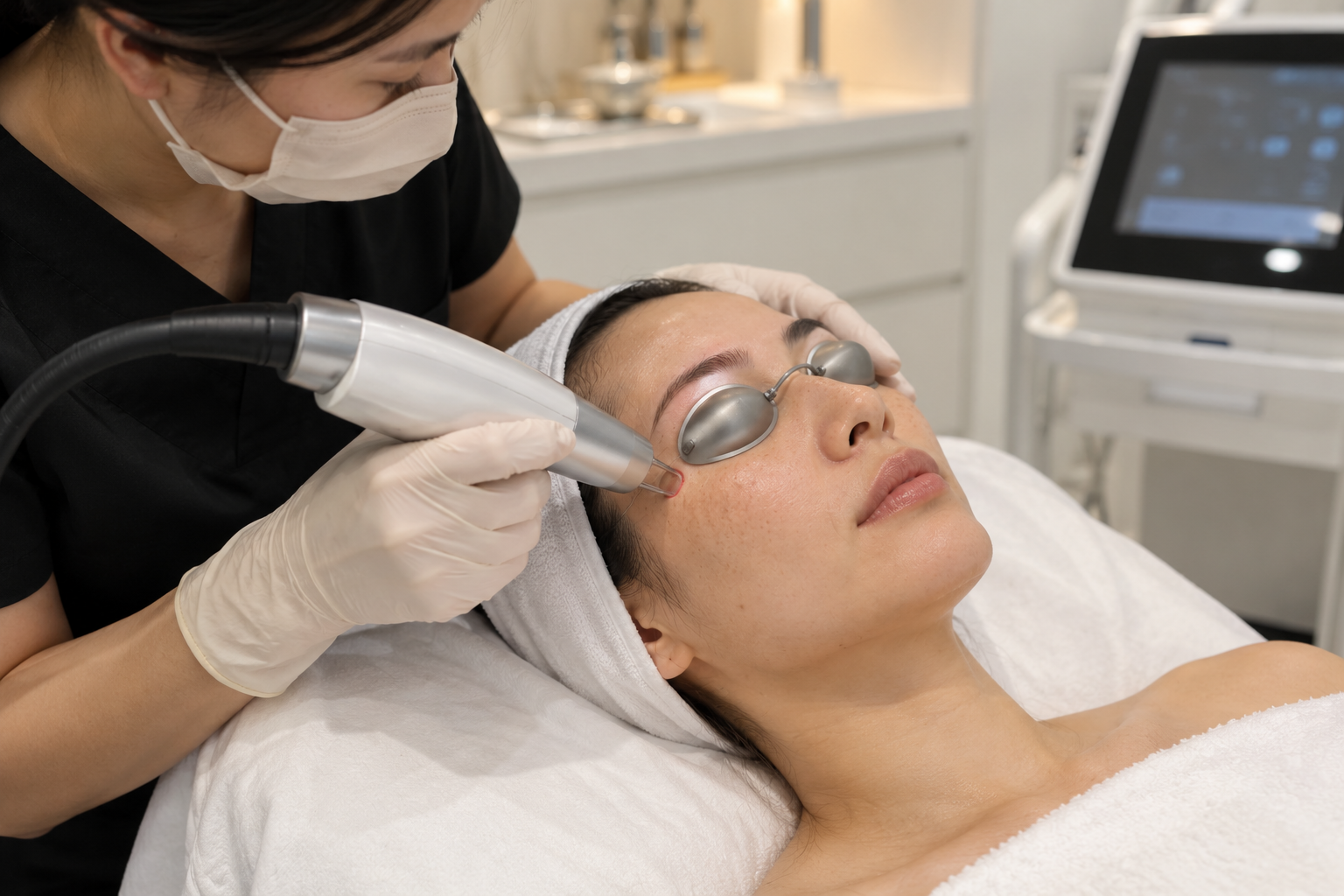
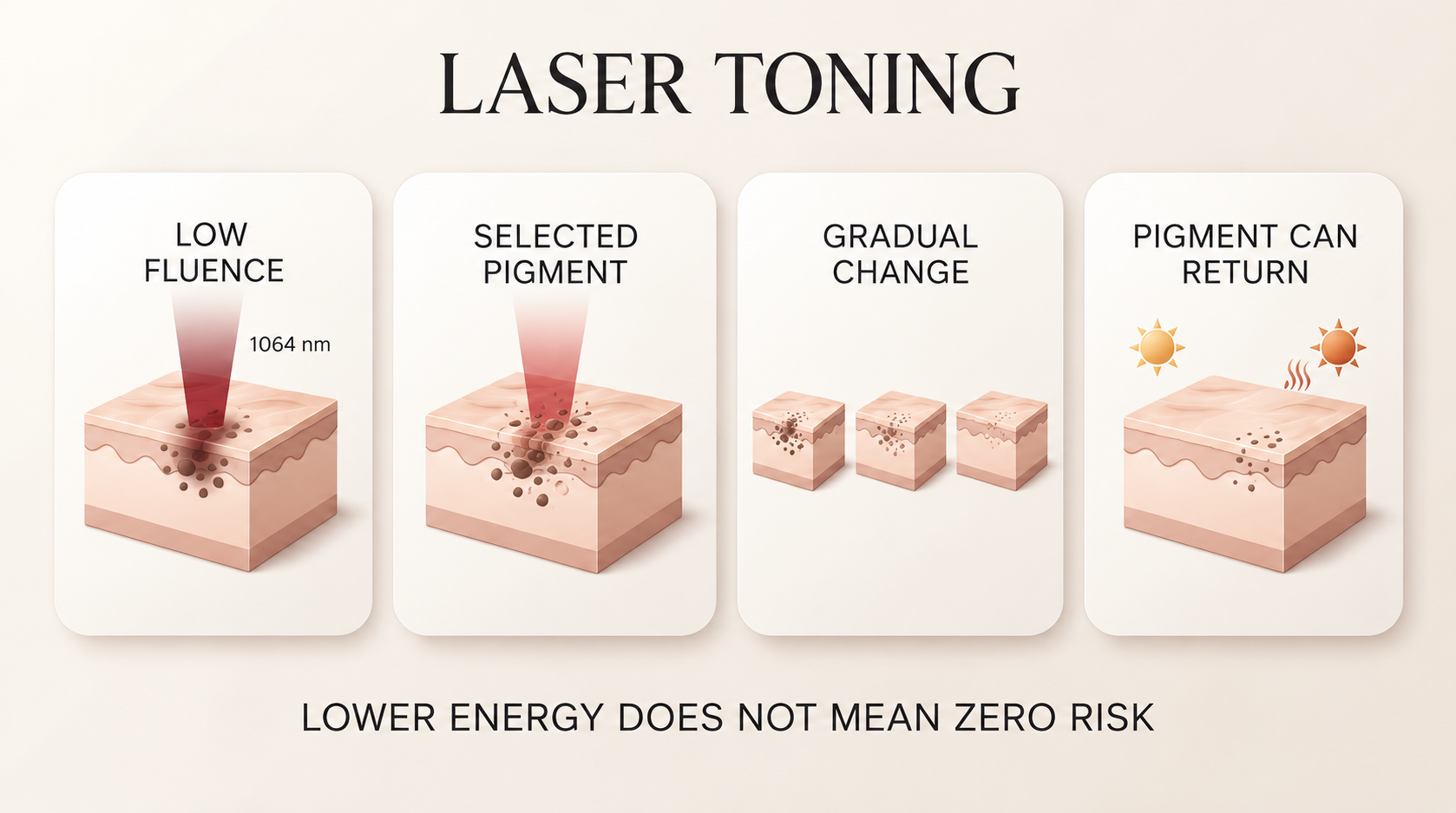
Laser toning generally refers to repeated treatment using relatively low fluence, often with a 1064 nm Q-switched or picosecond Nd:YAG platform, to influence selected pigment while limiting overt epidermal injury. It is a technique rather than a promise of permanent pigment removal.
Why lower fluence may be used
Pigment-prone skin can respond poorly to excessive inflammation. A lower-fluence strategy aims to create a more controlled interaction with melanin while reducing the visible injury associated with more aggressive treatment.
Where laser toning may fit
The technique may be considered for selected pigmentation patterns after the concern has been appropriately assessed. It is sometimes discussed in the management of melasma, but melasma is chronic and influenced by ultraviolet exposure, visible light, hormones, heat, and individual biology.
Why repeated treatment is not risk-free
Lower energy does not mean zero risk. Repeated laser exposure can still cause irritation, post-inflammatory pigment change, uneven lightening, or other unwanted effects. Treatment should be adjusted or stopped when the skin response is inappropriate.
Why melasma can return
Laser treatment does not remove the biological tendency toward melasma. Even after improvement, pigment can recur with sun exposure, hormonal influences, heat, inflammation, or other triggers. Maintenance usually depends heavily on photoprotection and a broader pigment strategy.
Why not every dark spot should be toned
Freckles, lentigines, post-inflammatory hyperpigmentation, dermal pigment, and melasma do not behave identically. Some pigmented lesions also require medical evaluation. The diagnosis should determine whether laser treatment belongs in the plan.
What a treatment plan should prioritize
Laser toning should be used only when the pigment pattern and skin history support it. Conservative fluence, careful spacing, photoprotection, and reassessment matter more than repeating sessions on a fixed schedule.
Know when repeated toning is no longer helping
Low fluence does not make repeated laser exposure automatically harmless. If pigment stops improving, becomes mottled, or the skin becomes more reactive, simply adding more sessions may increase risk without adding benefit. A plateau is a reason to reassess the diagnosis, triggers, and treatment strategy rather than continue on autopilot.


