

Facial Changes During Weight Loss: Why Volume and Skin Can Look Different
Updated: Oct 1

WELLNESS + RESTORATION
Weight loss changes more than the number on a scale. As body fat decreases, facial fat compartments can also lose volume, and the change may alter cheek fullness, temple contour, jawline definition, or skin laxity. The degree of change varies widely between individuals.
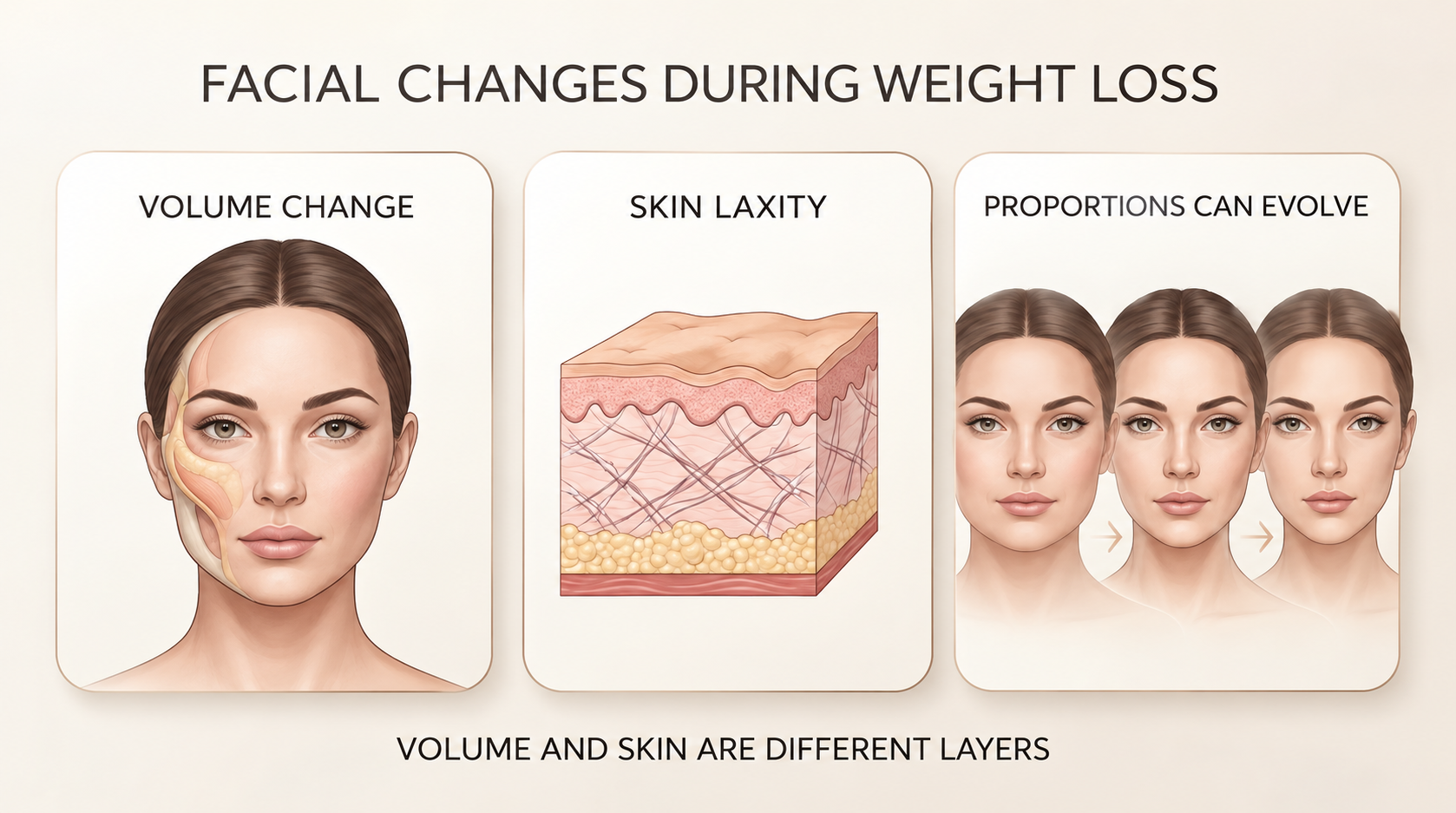
Facial fat is not distributed uniformly
The face contains multiple fat compartments with different roles in contour and support. Weight change can affect these compartments differently, altering the cheeks, temples, under-eye transitions, or lower face without producing the same degree of change everywhere.
Why some faces change more than others
Age, genetics, baseline facial volume, skin elasticity, rate of weight loss, and the amount of weight lost all influence how the face responds. Two people who lose the same amount of weight may look very different afterward.
A naturally lean face may show volume changes earlier than a fuller face.
Volume loss and skin laxity are different problems
A hollow cheek or temple reflects volume distribution, while loose skin reflects the ability of the skin and supporting tissues to contract. Adding filler to a lax face does not necessarily create tightening.
Treatment should distinguish which layer is creating the concern.
Why timing matters
If weight is still changing quickly, facial proportions may continue to evolve. Performing extensive volumizing treatment before weight stabilizes can make it harder to judge the long-term balance.
A staged approach allows treatment to follow the patient's actual anatomy rather than a temporary phase.
Why the face may keep changing after weight stabilizes
Soft tissue does not always settle at the same speed as body weight. Hydration, inflammation, sleep, and recent weight fluctuation can change how the face looks from week to week. After a major change, allowing time for stability can make it easier to distinguish temporary transition from a persistent contour concern.
This is especially important before filler or tightening treatment because adding volume too early may overcorrect an area that would have improved with time.
What treatments may be considered
Depending on the concern, a plan might involve skin care, collagen-stimulating treatments, energy-based procedures, selected filler, or no intervention. Significant excess skin may require a surgical opinion rather than more injectable volume.
No single treatment addresses every facial change associated with weight loss.
Health goals should remain separate from aesthetic pressure
Medical weight management should be guided by health, safety, and the patient's broader goals. Facial appearance is secondary and should not become a reason to avoid medically appropriate treatment.
Aesthetic concerns can be addressed thoughtfully after the pattern of change is understood.
What to remember about facial changes during weight loss
Facial changes during weight loss are the result of shifting volume and tissue support, not a single condition. The most natural aesthetic plan identifies whether the main issue is volume, laxity, skin quality, or a combination and treats only what is necessary.

